
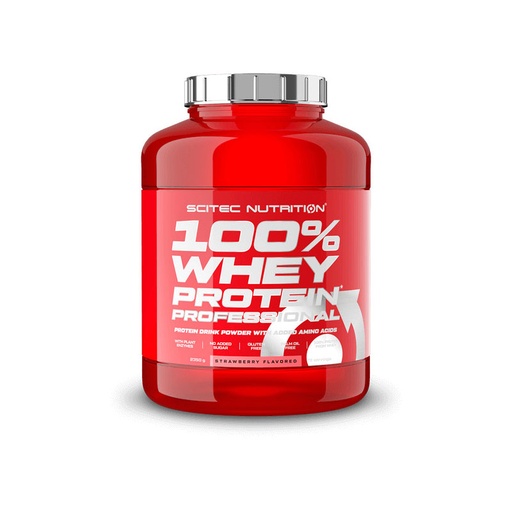
For two decades lifters were told that failing to drink a shake within thirty minutes of the last set wasted the session. That claim was always stronger in marketing than in the data. What replaced it is more useful: total daily protein first, dose per meal second, and timing as a genuine but smaller third factor.
Key takeaways
- Total daily protein is the dominant factor: 1.6 to 2.2 grams per kilogram of body weight.
- The post-training window is measured in hours, not thirty minutes, for most people.
- Muscle protein synthesis responds best to 0.4 grams per kilogram per meal, roughly 25 to 40 grams.
- Three to five protein feedings spread across the day beats one very large serving.
- Timing becomes genuinely important if you train fasted or eat only in a narrow window.
Where the Thirty-Minute Rule Came From
Early studies showed that muscle protein synthesis is elevated after resistance training and that providing amino acids amplifies that response. Some of the original work used fasted subjects, which exaggerated the apparent urgency: if you have eaten nothing for twelve hours, getting protein soon after training obviously matters. The finding was then generalised into a rule for everyone, and the supplement industry had no reason to correct it.
Later research reframed the picture. The elevation in muscle protein synthesis after a training session lasts for many hours, and in less experienced trainees it can remain raised for a day or more. A meta-analysis examining post-exercise protein timing found that when total daily protein intake was matched between groups, the apparent timing effect largely disappeared.
The Hierarchy That Actually Applies
Think of it as four levels in descending order of importance. First, total daily protein: 1.6 to 2.2 grams per kilogram of body weight covers almost everyone training for muscle or strength. Second, dose per meal: about 0.4 grams per kilogram per sitting, which for most people means 25 to 40 grams containing roughly two and a half to three grams of leucine. Third, distribution: three to five feedings spread reasonably evenly. Fourth, and last, precise timing around the session.
Getting level one right while ignoring levels three and four still produces excellent results. Obsessing over level four while missing level one produces nothing. This is why an athlete who reaches 160 grams of protein across four meals with no shake at all will outperform one who drinks a shake within ten minutes of training but totals only 90 grams a day.
- Level 1: total daily protein — 1.6–2.2 g per kg.
- Level 2: dose per meal — about 0.4 g per kg, 25–40 g.
- Level 3: distribution — three to five feedings daily.
- Level 4: timing around the session — real but smallest.

When Timing Genuinely Matters
There are clear exceptions where timing moves back up the list. If you train fasted, first thing in the morning or late in a fasting window, then eating protein soon after finishing is meaningfully better than waiting four hours, because the whole session was performed without incoming amino acids. The same applies during Ramadan, where the eating window is fixed and every feeding has to count.
Timing also matters when the gaps are extreme. If your last meal was six hours before training and your next is three hours after, a shake immediately afterwards is a sensible bridge. And at the other end of the day, thirty to forty grams of casein before sleep extends amino acid availability across the overnight fast, which controlled trials have linked to higher overnight muscle protein synthesis.
- Fasted or early morning training: eat soon after finishing.
- Ramadan and narrow eating windows: every feeding counts.
- Very long gaps around the session: use a shake as a bridge.
- Before sleep: 30–40 g of casein extends coverage overnight.
Practical Templates
For an evening trainee weighing eighty kilograms and targeting one hundred and sixty grams of protein, a simple structure works: forty grams at breakfast, forty at lunch, thirty as a pre-training snack, thirty from a shake or dinner after training, and twenty to thirty from casein before bed. Nothing about that plan requires a stopwatch, and it satisfies every level of the hierarchy.
For a morning trainee, move the pre-training feeding to a light option or train fasted and place a forty gram breakfast immediately after the session. For anyone eating three meals only, aim for forty to fifty grams per meal rather than trying to add feedings that will not happen. The best structure is always the one you will still be following in six months.
What This Means for Your Shopping List
Protein powder earns its place as a convenience tool, not as a magic timing device. Whey is the practical choice around training because it digests quickly and is easy to consume when appetite is low; casein makes more sense before sleep; and whole food covers the rest of the day perfectly well. If your daily total is already met from food, you do not need a shake at all.
What matters far more than the clock is that the product actually contains what it claims. Olympia Middle East has operated as an authorised agent for major international brands for more than twenty years, and every product we supply is sealed, traceable and genuine. If you are unsure how to distribute your protein across the day, our team can help you build a plan around your schedule.
Olympia recommended picks

ON Gold Standard, 100% Whey 2 LBS
A fast-digesting whey for the hours around training when appetite is low.
Shop now
ON Gold Standard, 100% Casein 2 Lbs
Slow-release casein for the pre-sleep feeding that closes the overnight gap.
Shop now
Amino Energy Zero with Electrolytes
A light amino option for long gaps between meals or fasted morning sessions.
Shop nowFrequently asked questions
Is the thirty-minute anabolic window real?
Not as a hard deadline for most people. Muscle protein synthesis stays elevated for many hours after training, so a window measured in hours is a more accurate description.
How much protein should I have in one meal?
Roughly 0.4 grams per kilogram of body weight, which usually means 25 to 40 grams. Larger single servings are not wasted, but they are not more effective for stimulating synthesis.
Do I need a shake straight after training?
Only if your next meal is hours away or you trained fasted. If you eat a protein-containing meal within a couple of hours, that is sufficient.
Does protein timing matter for fat loss?
Indirectly. Spreading protein across the day improves satiety and helps protect lean mass in a deficit, but total daily protein and total calories remain the main drivers.
Can I get all my protein from two large meals?
You can, and it will still work if the daily total is right. Three to five feedings appear slightly better for muscle protein synthesis, so use two only if it fits your life better.
Related reading
Not sure which product fits you?
Talk to our team in any Olympia branch in Oman or on WhatsApp and we will match a supplement to your goal and your budget.
Talk to an Olympia expert
 and then Add to Home Screen.
